Warm oats with plain yogurt and berries
Cook oats with milk or unsweetened fortified soy beverage. Add yogurt and fresh or thawed berries.
Enjoy familiar foods, discover a few new combinations and make meals fit your appetite and routine. This seven-day example includes breakfast, lunch, dinner and an optional snack each day.
This plan is for general inspiration. It has no fixed calorie or portion targets, is not a weight-loss diet and has not been individually assessed for your nutrient needs. Adjust amounts, add snacks or swap meals to suit your needs, preferences and budget.
If you have diabetes, kidney or heart disease, food allergies, a prescribed fluid limit, trouble swallowing or unintended weight loss, speak with a registered dietitian or your healthcare team before using the plan. Their instructions take priority. Read the nutrition and participation disclaimer.
Canada’s Food Guide suggests roughly half a plate of vegetables and fruit, a quarter whole grains and a quarter protein foods, choosing plant proteins often. These proportions guide food choices; they do not prescribe how much you need to eat.
For mixed meals such as soups or stews, include the same food groups across the meal. Make water your usual drink unless your care team has given you different guidance.
Based on Canada’s Food Guide plate.
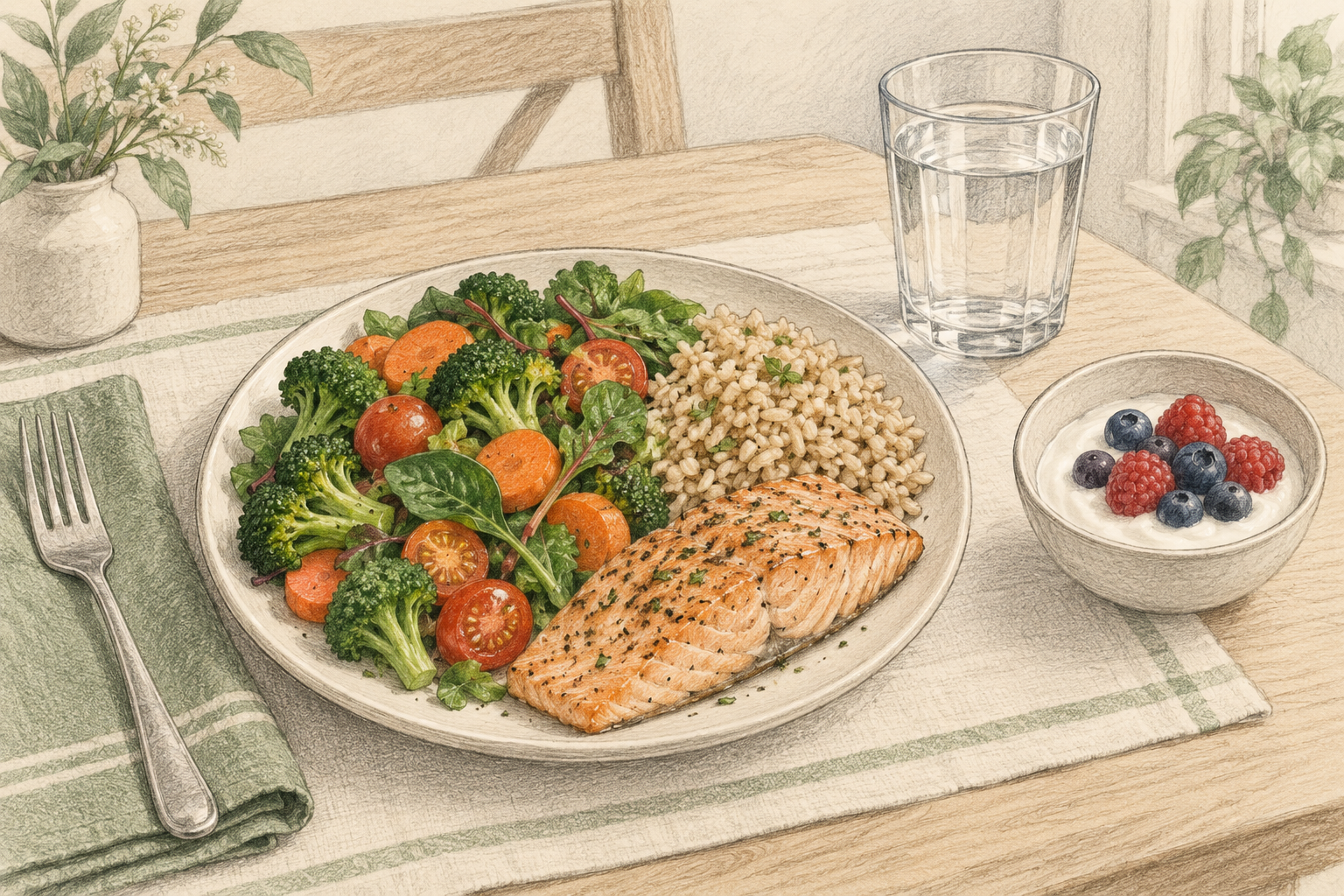
Make room for beans, lentils, tofu, eggs, fish, dairy or other protein foods you enjoy.
Keep water handy and drink through the day. Follow any prescribed fluid restriction rather than a general water target.
Frozen vegetables, canned beans and simple batch cooking can reduce effort. Share meals when you can.
Try herbs and spices for flavour. Choose softer cooked foods if chewing is difficult; swallowing problems need professional assessment.
Snacks below are optional examples, not a limit. Smaller, more frequent meals may be easier if your appetite is low. Persistent poor appetite or unplanned weight loss deserves individual advice. Read Health Canada’s healthy eating guidance for seniors.
Cook oats with milk or unsweetened fortified soy beverage. Add yogurt and fresh or thawed berries.
Serve with whole grain bread and a side of fruit. Choose lower-sodium soup or make your own.
Serve with broccoli and carrots. Swap salmon for tofu if preferred.
Choose ripe fruit or stewed pear if easier to chew.
Scramble eggs with spinach and serve with an orange or other fruit.
Combine chickpeas, cooked quinoa, cucumber and tomato with olive oil and lemon.
Serve with cooked green beans and roasted squash.
Add soft cooked vegetable sticks if preferred.
Use plain yogurt, softened oats and sliced banana. A high-protein fortified soy yogurt is an alternative; check the label.
Serve with whole grain toast and a side of fruit.
Add cooked zucchini and spinach. Use herbs to season.
Use lactose-free milk if you need it.
Spread a thin layer on whole grain toast and serve with sliced banana and milk or fortified soy beverage. Use a suitable seed butter if avoiding nuts.
Use whole grain bread, fully cooked egg and a little plain yogurt. Add a vegetable side.
Serve with brown rice. Choose a lower-sodium sauce and cook vegetables to a comfortable texture.
Choose fresh peaches or canned peaches in juice, drained.
Add stewed apple and cinnamon to oats, then a spoonful of plain yogurt.
Use whole grain bread and serve with cucumber, tomato or cooked vegetables.
Combine beans, tomatoes, peppers and corn; serve with quinoa and a side of greens.
Choose a lower-sodium option, or use plain yogurt instead.
Use fully cooked eggs with mushrooms and spinach; add whole grain toast and fruit.
Use a whole grain wrap, hummus and roasted peppers or zucchini. Add a side of fruit.
Serve with roasted carrots, green beans and brown rice.
Have the amount that suits your appetite.
Cook oats until soft and add ripe or stewed pear.
Combine lentils, quinoa and cooked vegetables with olive oil and herbs.
Serve with a generous helping of broccoli and roasted squash.
Choose an allergy-safe option and a texture you can manage comfortably.
Food and movement work together in everyday life. Explore the weekday workouts or gentle yoga week at your own pace.